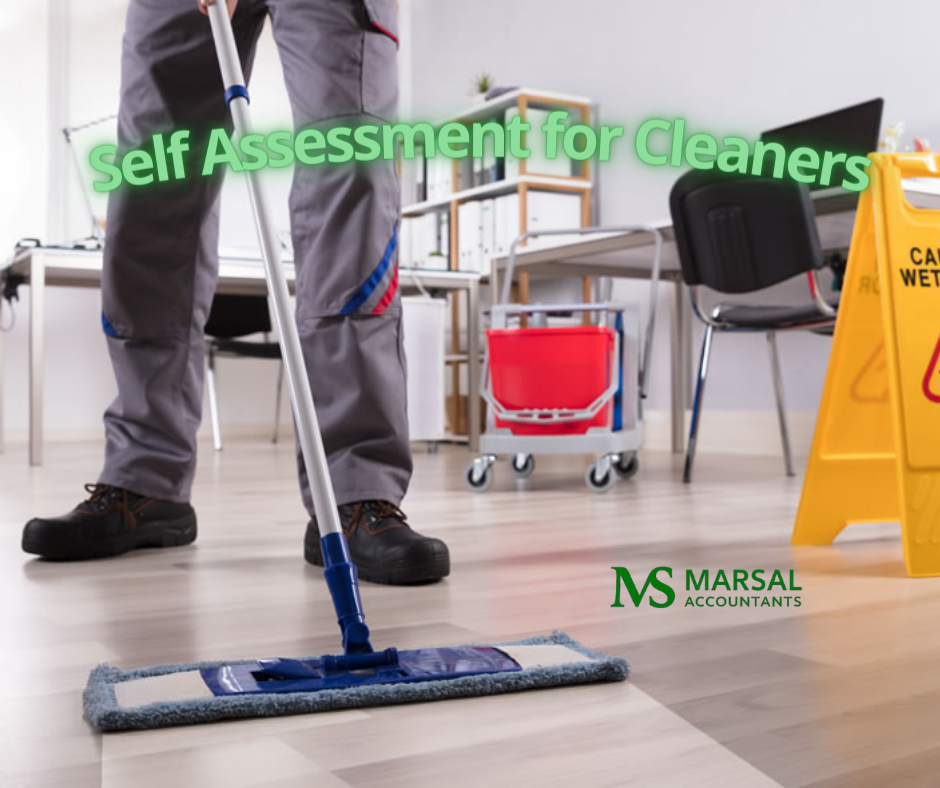
Self-Assessment Tax Guide for Domestic and Commercial Cleaners by Marsal Accountants in Paisley

Self‑Assessment Tax Guide for Self‑Employed Domestic & Commercial Cleaners by Marsal Accountants

Running your own cleaning business — whether you clean homes, offices, holiday lets, or commercial spaces — gives you flexibility and steady work. But it also means keeping track of your income, supplies, travel, and equipment. When you’re busy moving from property to property, it’s easy for receipts and records to pile up.

At Marsal Accountants in Paisley, serving Glasgow and Central Scotland, we specialise in supporting self‑employed cleaners. We help you stay compliant with HMRC, claim every allowable expense, and keep more of what you earn.

This guide explains the key records you need, the expenses cleaners can claim, and how to complete your Self Assessment smoothly.

Self Assessment for Domestic & Commercial Cleaners

If you work for yourself — whether as a domestic cleaner, office cleaner, deep‑clean specialist, Airbnb/holiday‑let cleaner, or end‑of‑tenancy cleaner — HMRC requires you to report your income and expenses through a Self Assessment tax return. This determines your final tax and National Insurance bill.

Why Accuracy Matters

Submitting a correct and timely return helps you:

  • Avoid penalties for late filing or late payment
  • Prevent interest charges on unpaid tax
  • Claim all allowable expenses to legally reduce your tax bill
  • Keep clean financial records for business planning

Essential Records for Cleaners

Tracking Your Income

  • Payments from domestic clients
  • Payments from offices, shops, or commercial contracts
  • Cash, bank transfer, and standing order payments
  • Income from deep cleans, end‑of‑tenancy cleans, or add‑on services
  • Income from Airbnb/holiday‑let changeovers

Allowable Expenses You Can Claim

  • Cleaning Supplies: Sprays, disinfectants, cloths, sponges, mop heads, bin bags
  • Equipment: Vacuum cleaners, steam cleaners, mops, buckets, brushes
  • Consumables: Gloves, wipes, paper towels, protective masks
  • Uniform & Protective Clothing: Aprons, overalls, non‑slip shoes
  • Vehicle Costs: Fuel, insurance, repairs, servicing, road tax (business portion)
  • Mileage: Instead of actual vehicle costs, you can claim HMRC’s simplified mileage rate (45p/mile for first 10,000 miles)
  • Business Costs: Public liability insurance, mobile phone (business use), advertising, website costs, accountancy fees
  • Equipment Repairs & Maintenance: Fixing vacuums, replacing parts, servicing machines
  • Training: Courses for COSHH, health & safety, or specialist cleaning

The Filing Process: Step‑by‑Step

  1. Register with HMRC as self‑employed if you haven’t already.
  2. Keep Records throughout the tax year (6 April to 5 April).
  3. Complete Your Return using the SA100 and SA103 forms, declaring all income and expenses.
  4. Pay Your Tax by 31 January each year.

Common Pitfalls for Cleaners

  • Not declaring cash jobs: All income must be reported.
  • Mixing personal and business spending: Use a separate bank account.
  • Forgetting small consumables: Cloths, sprays, wipes, and gloves add up.
  • Misclaiming vehicle costs: Choose either mileage or actual costs — not both.
  • Missing the deadline: 31 January for filing and payment.

You Keep Homes & Offices Clean — We’ll Keep Your Tax Stress‑Free

For self‑employed cleaners across Paisley, Glasgow, and Central Scotland, our Self Assessment support starts from £16.75 per month.

This includes full Self Assessment filing, annual accounts, and ongoing advice to keep your business running smoothly.

How Marsal Accountants Supports Your Cleaning Business

  • We identify every expense you can legally claim.
  • We handle the full tax return process for you.
  • We offer advice in English, Urdu, Punjabi, and Hindi.
  • We help you plan ahead so tax bills never catch you by surprise.

Your Questions, Answered

Q: I clean homes and offices. Do I need to file a tax return?

A: Yes. If your income is over £1,000 per year, you must register for Self Assessment and file a return.

Q: Can I claim for my cleaning equipment?

A: Absolutely. Equipment and maintenance costs are allowable expenses.

Q: Can I claim for travel between clients?

A: Yes. You can claim either actual vehicle costs or HMRC’s simplified mileage rate. We’ll help you choose the best option.

Q: Why should I use an accountant?

A: We save you time, stress, and money by ensuring everything is filed correctly and all expenses are claimed.

Self-Assessment Tax Guide for Window Cleaners by Marsal Accountants in Paisley

Self-Assessment Tax Guide for Mobile Window Cleaners by Marsal Accountants

Running your own window cleaning business gives you flexibility and steady income — but it also means keeping on top of your taxes. Tracking jobs, equipment, fuel, and payments can feel overwhelming when you’re busy working outdoors all day. At Marsal Accountants in Paisley, serving Glasgow and Central Scotland, we specialise in supporting self‑employed tradespeople like you. We make sure you claim every allowable expense, stay compliant with HMRC, and keep more of your earnings.

This guide explains the key records you need, the expenses window cleaners can claim, and how to complete your Self Assessment smoothly.

Self Assessment for Window Cleaners

If you work for yourself — whether traditional ladder work, water‑fed pole systems, or commercial contracts — HMRC requires you to report your income and expenses through a Self Assessment tax return. This determines your final tax and National Insurance bill.

Why Accuracy Matters

Submitting a correct and timely return helps you:

  • Avoid penalties for late filing or late payment
  • Prevent interest charges on unpaid tax
  • Claim all allowable expenses to legally reduce your tax bill
  • Keep clean financial records for business planning

Essential Records for Window Cleaners

Tracking Your Income

  • Invoices for domestic and commercial clients
  • Cash and bank transfer payments received
  • Regular round collections (weekly/fortnightly/monthly)
  • Income from gutter cleaning, fascia cleaning, or add‑on services

Allowable Expenses You Can Claim

  • Cleaning Equipment: Squeegees, scrapers, buckets, cloths, T‑bars, poles
  • Water‑Fed Pole System Costs: Filters, resin, pumps, hoses, purification equipment
  • Consumables: Soap, detergents, microfibre cloths, rubber blades
  • Vehicle Costs: Fuel, insurance, repairs, servicing, road tax (business portion)
  • Mileage: Instead of actual vehicle costs, you can claim HMRC’s simplified mileage rate (45p/mile for first 10,000 miles)
  • Protective Clothing: Waterproofs, gloves, boots, hi‑vis jackets
  • Business Costs: Public liability insurance, mobile phone (business use), advertising, website costs, accountancy fees
  • Equipment Repairs & Maintenance: Fixing pumps, replacing hoses, repairing poles
  • Training: Courses for safety, ladder use, or commercial cleaning

The Filing Process: Step‑by‑Step

  1. Register with HMRC as self‑employed if you haven’t already.
  2. Keep Records throughout the tax year (6 April to 5 April).
  3. Complete Your Return using the SA100 and SA103 forms, declaring all income and expenses.
  4. Pay Your Tax by 31 January each year.

Common Pitfalls for Window Cleaners

  • Not declaring cash jobs: All income must be reported.
  • Mixing personal and business spending: Use a separate bank account.
  • Forgetting small consumables: Cloths, soap, and rubber blades add up.
  • Misclaiming vehicle costs: Choose either mileage or actual costs — not both.
  • Missing the deadline: 31 January for filing and payment.

Focus on the Glass — We’ll Handle the Tax

For window cleaners across Paisley, Glasgow, and Central Scotland, our Self Assessment support starts from £16.75 per month.

This includes full Self Assessment filing, annual accounts, and ongoing advice to keep your business running smoothly.

How Marsal Accountants Supports Your Business

  • We identify every expense you can legally claim.
  • We handle the full tax return process for you.
  • We offer advice in English, Urdu, Punjabi, and Hindi.
  • We help you plan ahead so tax bills never catch you by surprise.

Your Questions, Answered

Q: I clean windows door‑to‑door. Do I need to file a tax return?

A: Yes. If your income is over £1,000 per year, you must register for Self Assessment and file a return.

Q: Can I claim for my van or car?

A: Yes. You can claim either actual running costs or HMRC’s simplified mileage rate. We’ll help you choose the best option.

Q: Can I claim for my water‑fed pole system?

A: Absolutely. Equipment and maintenance costs are allowable expenses.

Q: Why should I use an accountant?

A: We save you time, stress, and money by ensuring everything is filed correctly and all expenses are claimed.

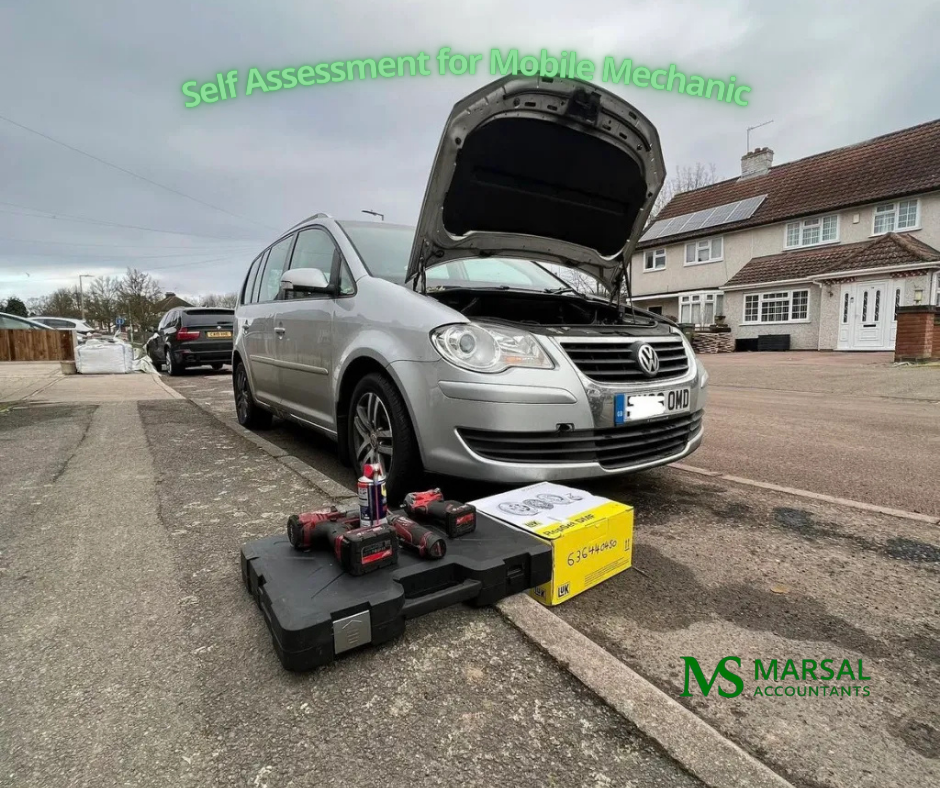
Self-Assessment Tax Guide for Mobile Mechanics by Marsal Accountants in Paisley

Self-Assessment Tax Guide for Mobile Mechanics by Marsal Accountants

Running your own mobile mechanic business brings freedom, but also the responsibility of managing your taxes. Keeping on top of income, expenses, and your Self Assessment can feel like a full-time job on its own. At Marsal Accountants in Paisley, serving Glasgow and Central Scotland, we specialise in helping tradespeople. We ensure you claim every allowable expense, file accurately, and keep more of your hard-earned money.

This guide walks you through the key records you need, common claims for mechanics, and how to stay compliant with HMRC.

Self Assessment for the Mobile Mechanic

As a self-employed mechanic, HMRC requires you to report your annual business income and expenses through a Self Assessment tax return. This determines your final tax and National Insurance bill for the year.

Why Getting It Right Matters

Filing an accurate and timely return is crucial to:

  • Avoid automatic penalties for late filing and payment
  • Prevent interest charges building up on unpaid tax
  • Ensure you claim back everything you’re entitled to, legally reducing your bill
  • Keep your financial records straight for business planning

Essential Records for Your Mechanic Business

Tracking Your Income

  • Invoices issued to all customers
  • Records of cash and card payments received
  • Payments from any garage or subcontract work
  • Any income from selling parts or used vehicles

Allowable Expenses You Can Claim

  • Tools & Equipment: Spanners, diagnostic scanners, tool chests, jack stands, compressor
  • Parts & Consumables: Oil, filters, brakes, bulbs, fluids purchased for customer jobs
  • Vehicle Running Costs: Fuel, insurance, road tax, servicing, repairs for your work van (apportioned for business use)
  • Business Use of Your Van: You can claim a simplified mileage allowance (45p/mile for first 10,000 miles) instead of actual costs
  • Protective Clothing: Overalls, steel-toe boots, gloves
  • Business Costs: Public liability insurance, trade membership fees, mobile phone (business portion), accountancy fees
  • Workspace: Costs for your home office admin or storage for tools/parts
  • Training: Courses to update skills (e.g., on new electric vehicle systems)

The Filing Process: Step-by-Step

  1. Register with HMRC as self-employed if you’re just starting out.
  2. Keep Records diligently throughout the tax year (6 April to 5 April).
  3. Complete Your Return using the SA100 form and the self-employed pages (SA103), declaring all income and deducting all allowable expenses.
  4. Pay What You Owe by the 31 January deadline.

Common Pitfalls for Mobile Mechanics

  • Forgetting ‘Cash-in-Hand’ Jobs: All income must be declared.
  • Mixing Personal & Business Spending: Use a separate business bank account.
  • Overlooking Small Tools & Consumables: Every socket, litre of oil, and can of brake cleaner adds up.
  • Misclaiming Vehicle Costs: Be clear on claiming actual costs vs. simplified mileage.
  • Missing the Deadline: 31 January for online filing and payment. Mark it in your calendar.

Focus on Your Tools, We’ll Handle the Numbers

For mobile mechanics across Paisley, Glasgow, and Central Scotland, our tailored accounting support starts from £16.75 per month.

This includes your full Self Assessment service, annual accounts preparation, and ongoing advice to keep your business running smoothly.

How Marsal Accountants Supports Your Business

  • We identify every possible expense claim specific to your trade.
  • We handle the form-filling and submission, giving you complete peace of mind.
  • We provide clear advice in English, Urdu, Punjabi, and Hindi.
  • We help you plan for future tax bills, so there are no surprises.

Your Questions, Answered

Q: I work for myself fixing cars in people’s driveways. Do I need to do a tax return?

A: Yes. If you are self-employed and your annual income is over £1,000 (the Trading Allowance), you are legally required to register for Self Assessment and file a return.

Q: Can I claim for my van?

A: Absolutely. You can claim either the actual running costs (fuel, repairs, insurance apportioned for business use) or use HMRC’s simplified 45p per mile allowance. We can advise which method is better for you.

Q: I bought a new diagnostic scanner this year. Can I claim it?

A: Yes. This is a capital allowance claim for equipment. We’ll ensure it’s included correctly to reduce your taxable profit.

Q: What’s the biggest benefit of using an accountant?

A: Time, stress, and money. We save you the hours of admin, ensure it’s done right to avoid penalties, and our expertise in claiming expenses typically saves you more than our fee.

Self-Assessment Tax Guide for Landscapers & Gardeners by Marsal Accountants in Paisley

Self-Assessment Tax Guide for Landscapers & Gardeners by Marsal Accountants

Building beautiful outdoor spaces is your passion. Managing spreadsheets and tax calculations? Probably not. As a self-employed landscaper or gardener in Paisley, Glasgow, or across Central Scotland, you have a unique set of expenses and income patterns. Marsal Accountants understands the seasonal nature of your work and helps you file an accurate Self Assessment, ensuring you claim for everything from plants to petrol.

This guide is designed to help you cultivate a clear understanding of your tax responsibilities.

Understanding Your Self Assessment

Your tax return is the annual statement of your business’s health. It calculates your profit (income minus allowable expenses), on which you pay Income Tax and National Insurance.

The Value of Accurate Filing

  • Avoid Penalties: Late filing triggers an immediate £100 fine.
  • Maximize Your Claims: Proper records ensure you deduct every eligible cost, lowering your tax bill.
  • Plan for the Future: Clear accounts help you price jobs better and manage seasonal cash flow.
  • Peace of Mind: Knowing you’re fully compliant with HMRC lets you focus on your projects.

Cultivating Good Records: What to Keep

Income Seeds (What You Earn)

  • Detailed invoices for landscaping projects, garden maintenance contracts, and one-off jobs
  • Records of all payments received (bank transfer, cash, cheque)
  • Income from selling plants, mulch, or other materials

Expenses You Can Weed Out (What You Claim)

  • Tools & Machinery: Spades, mowers, strimmers, hedge cutters, leaf blowers, rented equipment
  • Materials & Plants: Turf, soil, mulch, seeds, shrubs, trees, paving slabs, fence panels
  • Vehicle & Travel: Fuel for vans/trailers, insurance, repairs. Alternatively, claim 45p/mile for business travel.
  • Clothing: Safety boots, waterproof trousers, gloves, sun protection hats (if solely for work)
  • Business Operations: Public liability insurance, website costs, phone bill (business %), bank charges, accountancy fees
  • Subcontractor Costs: Payments to casual labour (you must record their details for HMRC)
  • Home Office: Proportion of home costs for admin, or a flat-rate allowance.

Navigating the Tax Year

The tax year runs 6 April to 5 April. Keep all receipts and records organised during this period. After 5 April, you have until the following 31 January to file your online return and pay any tax due.

Common Growing Pains (Mistakes to Avoid)

  • Ignoring Small Cash Jobs: All income, no matter how small, contributes to your turnover.
  • Losing ‘Small’ Receipts: A bag of compost here, some bulbs there – it all adds up significantly over a year.
  • Not Apportioning Costs: Is your van used 100% for business? Is your phone used 50% for work? Be realistic.
  • Forgetting Depreciation: Large equipment like ride-on mowers can be claimed as a capital allowance.
  • Missing the Deadline: The 31 January deadline is fixed. Planning is essential.

Let Your Business Bloom. We’ll Handle the Paperwork.

For landscapers and gardeners who prefer being outdoors, our fixed-fee accounting packages provide clarity and control. Professional support starts from £16.75 per month.

We become your partner, handling your Self Assessment, bookkeeping, and providing year-round advice tailored to your seasonal business.

Why Partner with Marsal Accountants?

  • Trade-Specific Knowledge: We understand your expense categories and seasonal income challenges.
  • Proactive Advice: We don’t just file forms; we help you structure your business efficiently.
  • Multilingual Support: Clear communication in English, Urdu, Punjabi, and Hindi.
  • Time Saved: Reclaim the hours spent on admin and invest them back into your business or your free time.

Frequently Asked Questions

Q: I’m a gardener with a mix of regular customers and one-off projects. Am I self-employed?

A: If you work for yourself, find your own customers, provide your own tools, and decide how and when the work is done, you are almost certainly self-employed and need to file a Self Assessment.

Q: Can I claim for plants and materials I buy for a job?

A: Yes, absolutely. The cost of materials purchased specifically for a customer’s project is a direct expense and is fully deductible from the income for that job.

Q: What if I hire casual help for a big landscaping project?

A: Their wage is a legitimate business expense. You must keep their full name, address, and the amount paid, in case HMRC asks for details.

Q: How do you help with seasonal income fluctuations?

A: We help you plan for your January tax bill by setting aside money regularly. We can also advise on making payments on account to spread the cost, ensuring a large bill never catches you off guard.

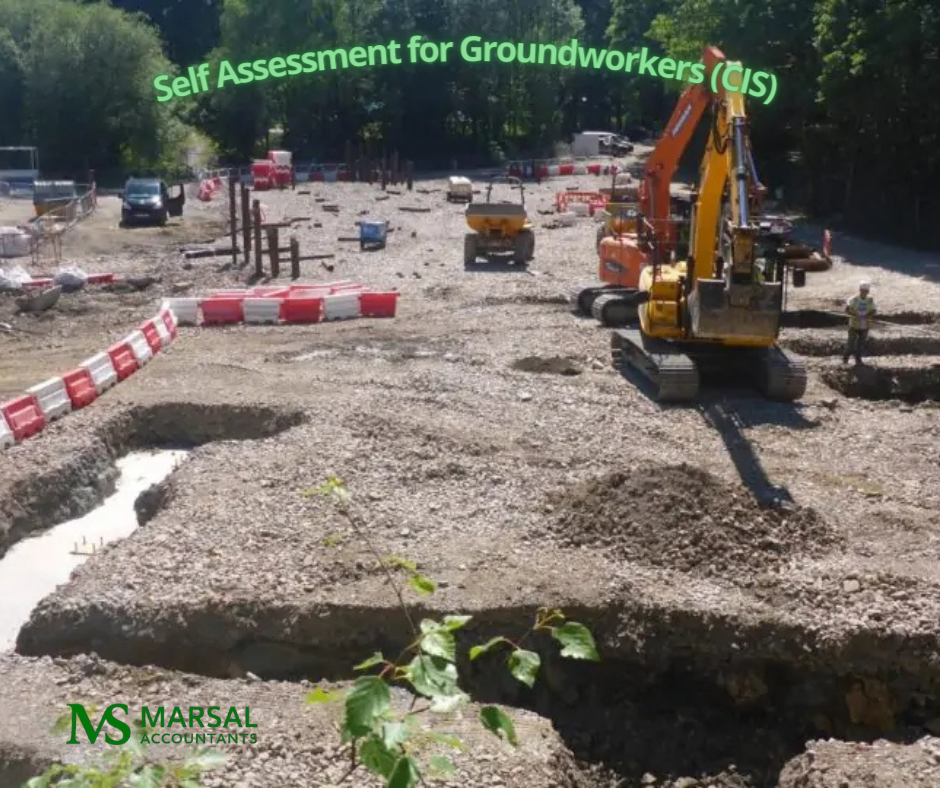
Groundworkers (CIS) Self-Assessment Guide by Marsal Accountants in Paisley

Groundworkers (CIS) Self-Assessment Guide by Marsal Accountants in Paisley

Working as a self-employed groundworker under the Construction Industry Scheme (CIS) often means tax is deducted before you’re paid.
At Marsal Accountants, based in Paisley and serving
Glasgow and Central Scotland, we help CIS groundworkers prepare and submit their
Self Assessment tax returns accurately, claim all allowable expenses, and recover any refund due.

This guide explains how CIS filing works, what records you need, and how to complete your return correctly.

What Is Self Assessment for CIS Groundworkers?

Self Assessment is HMRC’s system for reporting income and expenses. As a CIS groundworker, you must report income, expenses, and any CIS tax already deducted.

Why Filing Matters

Even if CIS tax is deducted by contractors, filing ensures:

  • Avoiding late filing penalties
  • Preventing interest on unpaid tax
  • Receiving any CIS tax refund you’re due promptly

Records CIS Groundworkers Should Keep

Income

  • CIS payment statements from contractors
  • Invoices you’ve issued
  • Any private (non-CIS) groundwork

Expenses

  • Tools (shovels, rakes, levels, compactors, laser levels)
  • Materials (hardcore, sand, cement, drainage pipes, kerbs)
  • Protective clothing (steel-toe boots, hi-vis, gloves, hard hat)
  • Plant hire (excavator, roller, dumper if hired)
  • Van or vehicle costs (fuel, insurance, repairs, servicing)
  • Public transport or mileage for work travel
  • Public liability insurance
  • Mobile phone (business use portion)
  • Training and certification (CSCS card, CPCS tickets)
  • Accountancy fees

Other Helpful Documents

  • CIS deduction statements
  • Receipts and invoices
  • Bank statements
  • Mileage logs (if claiming mileage)
  • Plant hire invoices

Registering for Self Assessment

  • Register with HMRC as self-employed – provide personal and business details
  • Get your Unique Taxpayer Reference (UTR)
  • Set up a Government Gateway account for online filing

Filing Your Self Assessment (CIS)

  • Complete SA100 (main tax return) and SA103 (self-employed pages)
  • Enter total income from CIS and private groundwork
  • Add all allowable business expenses
  • Include total CIS tax deducted

HMRC calculates if you owe more tax or are due a refund. Filing online is faster and gives extra time compared to paper returns.

Key Deadlines

  • Paper return: 31 October
  • Online return and payment: 31 January

Common Mistakes CIS Groundworkers Make

  • Not keeping CIS deduction statements
  • Forgetting private (non-CIS) jobs as income
  • Not claiming plant hire costs or groundworking materials
  • Mixing personal and business spending
  • Missing filing or payment deadlines

CIS Groundworker Self Assessment – Clear Monthly Pricing

Groundworkers in Paisley, Glasgow, and
Central Scotland can get professional Self Assessment and accounting support from
Marsal Accountants from £16.75 per month.

This includes preparation of accounts, filing your HMRC return, and year-round support — with no hidden fees.

How Marsal Accountants Can Help CIS Groundworkers

  • Review CIS statements and income
  • Ensure all allowable expenses are claimed (including plant hire)
  • Complete and file Self Assessment on time
  • Explain everything clearly in English, Urdu, Punjabi, and Hindi

Frequently Asked Questions

Q: Do I still need to file a tax return if CIS tax is already deducted?

Yes. Even if contractors deduct CIS tax, you must still file to declare income, expenses, and CIS deductions.

Q: What expenses can CIS groundworkers claim?

Tools, materials (hardcore, drainage), plant hire, protective clothing, vehicle expenses, insurance, mileage, training, phone (business portion), and accountancy fees.

Q: When are the Self Assessment deadlines?

Paper returns: 31 October. Online returns and payments: 31 January.

Q: How can Marsal Accountants help CIS groundworkers?

We review CIS statements, prepare accounts, file your Self Assessment, explain everything clearly in English, Urdu, Punjabi, and Hindi, and ensure all allowable expenses and refunds are claimed.

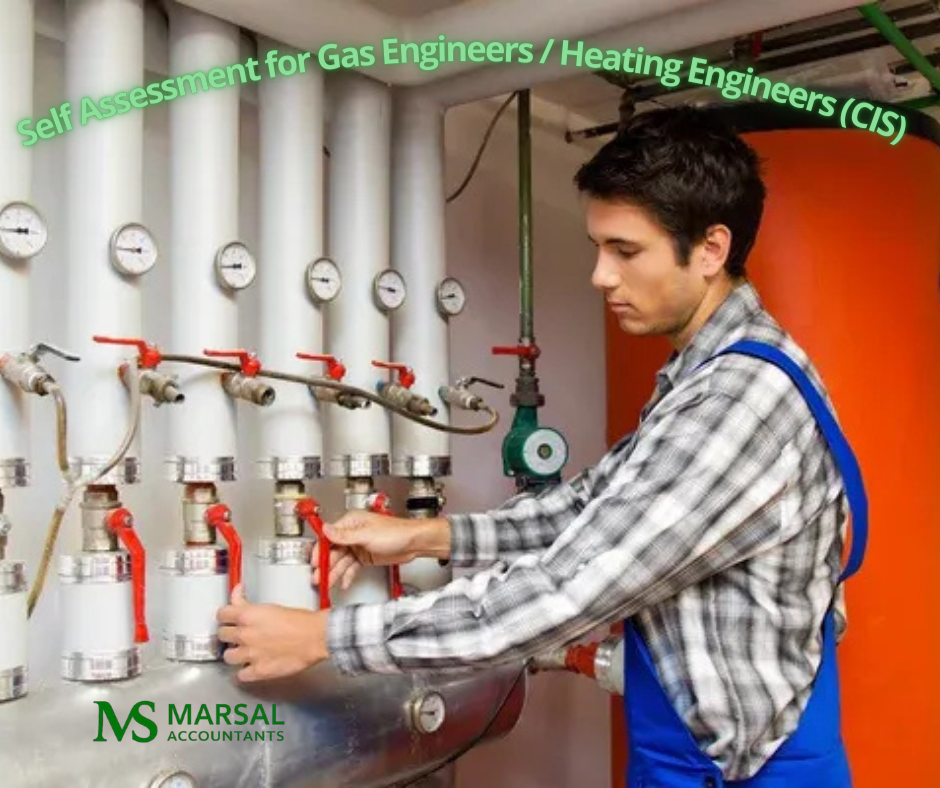
Gas Engineers / Heating Engineers (CIS) Self-Assessment Guide by Marsal Accountants in Paisley

Gas Engineers / Heating Engineers (CIS) Self-Assessment Guide by Marsal Accountants in Paisley

Working as a self-employed gas or heating engineer under the Construction Industry Scheme (CIS) often means tax is deducted before you’re paid.
At Marsal Accountants, based in Paisley and serving
Glasgow and Central Scotland, we help CIS gas and heating engineers prepare and submit their
Self Assessment tax returns accurately, claim all allowable expenses, and recover any refund due.

This guide explains how CIS filing works, what records you need, and how to complete your return correctly.

What Is Self Assessment for CIS Gas & Heating Engineers?

Self Assessment is HMRC’s system for reporting income and expenses. As a CIS gas or heating engineer, you must report income, expenses, and any CIS tax already deducted.

Why Filing Matters

Even if CIS tax is deducted by contractors, filing ensures:

  • Avoiding late filing penalties
  • Preventing interest on unpaid tax
  • Receiving any CIS tax refund you’re due promptly

Records CIS Gas & Heating Engineers Should Keep

Income

  • CIS payment statements from contractors
  • Invoices you’ve issued
  • Any private (non-CIS) gas or heating work

Expenses

  • Tools (pipe cutters, wrenches, manometers, flue gas analysers)
  • Materials (pipes, fittings, boilers, radiators, thermostats)
  • Protective clothing (boots, gloves, overalls)
  • Van or vehicle costs (fuel, insurance, repairs, servicing)
  • Public transport or mileage for work travel
  • Public liability and Gas Safe registration insurance
  • Mobile phone (business use portion)
  • Training and certification (Gas Safe registration, ACS qualifications)
  • Accountancy fees

Other Helpful Documents

  • CIS deduction statements
  • Receipts and invoices
  • Bank statements
  • Mileage logs (if claiming mileage)
  • Gas Safe registration certificates

Registering for Self Assessment

  • Register with HMRC as self-employed – provide personal and business details
  • Get your Unique Taxpayer Reference (UTR)
  • Set up a Government Gateway account for online filing

Filing Your Self Assessment (CIS)

  • Complete SA100 (main tax return) and SA103 (self-employed pages)
  • Enter total income from CIS and private gas/heating work
  • Add all allowable business expenses
  • Include total CIS tax deducted

HMRC calculates if you owe more tax or are due a refund. Filing online is faster and gives extra time compared to paper returns.

Key Deadlines

  • Paper return: 31 October
  • Online return and payment: 31 January

Common Mistakes CIS Gas & Heating Engineers Make

  • Not keeping CIS deduction statements
  • Forgetting private (non-CIS) jobs as income
  • Not claiming specialist tools or Gas Safe registration costs
  • Mixing personal and business spending
  • Missing filing or payment deadlines

CIS Gas & Heating Engineer Self Assessment – Transparent Monthly Pricing

Gas and heating engineers in Paisley, Glasgow, and
Central Scotland can get professional Self Assessment and accounting support from
Marsal Accountants from £16.75 per month.

This includes preparation of accounts, filing your HMRC return, and year-round support — no hidden fees.

How Marsal Accountants Can Help CIS Gas & Heating Engineers

  • Review CIS statements and income
  • Ensure all allowable expenses are claimed (including certification costs)
  • Complete and file Self Assessment on time
  • Explain everything clearly in English, Urdu, Punjabi, and Hindi

Frequently Asked Questions

Q: Do I still need to file a tax return if CIS tax is already deducted?

Yes. Even if contractors deduct CIS tax, you must still file to declare income, expenses, and CIS deductions.

Q: What expenses can CIS gas and heating engineers claim?

Tools, materials (pipes, boilers), protective clothing, vehicle expenses, insurance, Gas Safe registration, mileage, training, phone (business portion), and accountancy fees.

Q: When are the Self Assessment deadlines?

Paper returns: 31 October. Online returns and payments: 31 January.

Q: How can Marsal Accountants help CIS gas and heating engineers?

We review CIS statements, prepare accounts, file your Self Assessment, explain everything clearly in English, Urdu, Punjabi, and Hindi, and ensure all allowable expenses and refunds are claimed.